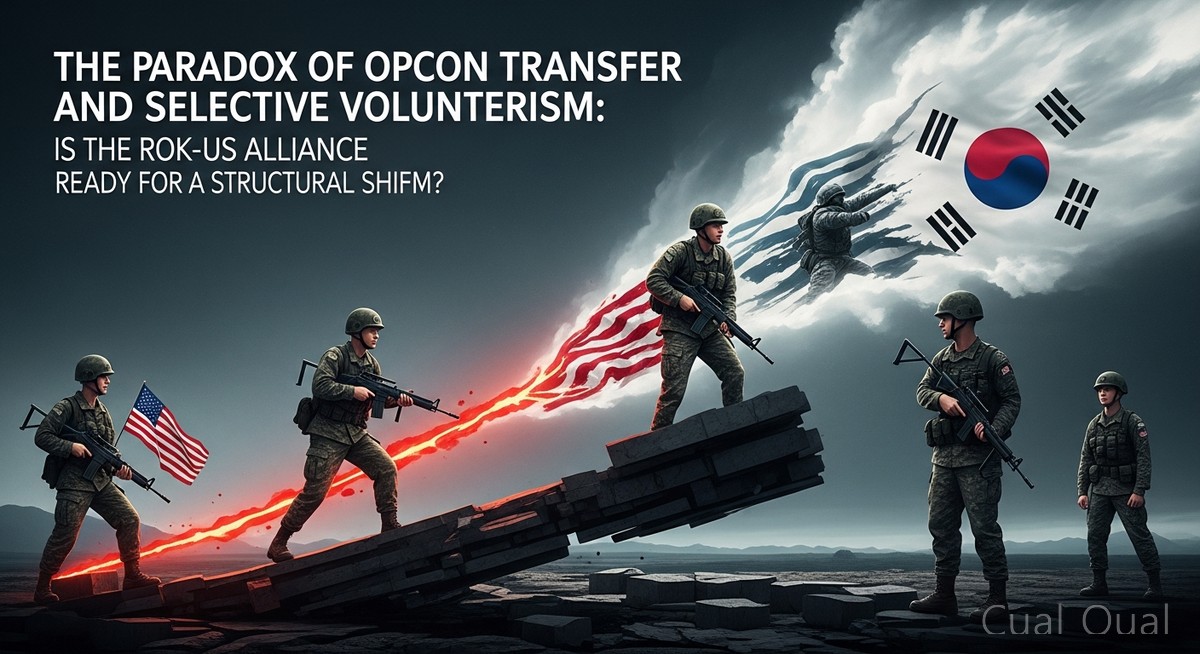
- 전시작전통제권(전작권) 회수가 단순한 주권 회복을 넘어 한미 연합방위 체제의 근간을 어떻게 흔들 수 있는지 심층 분석합니다.
- 인구 절벽 시대의 고육지책인 '선택적 모병제'가 군 전력 정예화와 국방비 부담 사이에서 가질 이중적 얼굴을 조명합니다.
- A deep dive into how the transfer of Operational Control (OPCON) could fundamentally reshape the ROK-US combined defense posture beyond the rhetoric of sovereignty.
- An analysis of the 'Selective Volunteer Military System' as a double-edged sword between military professionalization and fiscal burden in an era of demographic decline.
2026년 3월, 대한민국 안보 지형이 거대한 변곡점에 섰습니다. 이재명 대통령이 강조한 '조속한 전작권 회수'와 '선택적 모병제'는 단순한 정책 제안을 넘어, 지난 70년간 유지되어 온 한미동맹의 물리적 구조를 근본적으로 재편하겠다는 선언과 다름없습니다. 하지만 우리는 여기서 멈춰 서서 가장 본질적인 질문을 던어야 합니다. 과연 우리는 전작권 회수가 한미동맹이라는 거대한 메커니즘 속에서 무엇을 의미하는지, 그리고 그 변화가 초래할 '비용'과 '리스크'를 감당할 준비가 되어 있는지 말입니다. 단순히 '우리 군의 일은 우리가 결정한다'는 감성적 자주론을 넘어, 냉혹한 국제정치적 역학 관계 속에서 이 이슈를 해부해 보겠습니다.
In March 2026, South Korea's security landscape stands at a major inflection point. The emphasis on an "expeditious transfer of Operational Control (OPCON)" and a "Selective Volunteer Military System" by President Lee Jae-myung is more than just a policy suggestion; it is a declaration to fundamentally restructure the physical framework of the ROK-US alliance that has endured for 70 years. However, we must pause and ask the most fundamental question: Do we truly understand what the recovery of OPCON signifies within the vast mechanism of the alliance, and are we prepared for the "costs" and "risks" that follow? Beyond the emotional rhetoric of sovereignty, this column dissects these issues within the cold reality of international power politics.
[/INTRO_KO]
1. 전작권 회수의 본질: ‘지휘권’의 이동인가, ‘동맹의 성격’ 변화인가?
전시작전통제권(OPCON) 회수를 논할 때 가장 간과되는 지점은 그것이 단순한 '군사적 지휘권의 이전'에 그치지 않는다는 사실입니다. 현재의 한미연합사(CFC) 체제는 미군 장성이 사령관을 맡음으로써 미국의 증원 전력이 자동적으로, 그리고 압도적으로 개입하게 만드는 '인계철선(Tripwire)' 역할을 수행합니다. 하지만 한국군 대장이 사령관을 맡는 미래연합사 체제로의 전환은 미국 내부에서 "미군이 타국 장군의 지휘를 받는 것이 타당한가?"라는 정치적 논쟁을 촉발할 가능성이 매우 높습니다.
- 미군 개입의 불확실성 증대: 전작권이 전환되면 미국은 '주도'가 아닌 '지원'의 역할로 물러나게 됩니다. 이는 유사시 미 전략 자산의 전개 속도와 규모에 미묘한 변화를 줄 수 있는 구조적 요인입니다.
- 한미동맹의 '비대칭성' 해소와 그 대가: 자주국방의 목소리가 커질수록 미국은 한국에 더 많은 방위비 분담과 독자적인 안보 책임을 요구할 것입니다. 우리는 전작권이라는 '상징'을 얻는 대신, '무한 책임'이라는 무거운 짐을 지게 될 준비가 되었습니까?
결국 전작권 회수는 한미동맹을 '혈맹'의 단계에서 '전략적 파트너십'으로 이동시키는 트리거가 될 수 있습니다. 전작권 회수의 진정한 의미는 미국이 한국을 위해 기꺼이 피를 흘릴 '구조적 보장'을 약화시킬 수도 있다는 위험성을 내포하고 있습니다.
2. 선택적 모병제: 인구 절벽의 해법인가, 전력 약화의 서막인가?
인구 급감으로 인해 병력 자원이 부족해지는 상황에서 '선택적 모병제'는 피할 수 없는 선택처럼 보입니다. 하지만 이 제도가 안착하기 위해서는 천문학적인 국방 예산의 증액이 필수적입니다. 숙련된 전투 전문가를 육성하기 위한 급여 체계와 복지 시설 확충은 물론, 병력 공백을 메울 고도의 무기 체계 자동화(AI/드론) 비용이 동시에 발생하기 때문입니다.
주목해야 할 핵심 포인트는 '군대의 질적 고도화'와 '사회적 형평성'의 충돌입니다. 모병제가 도입될 경우, 경제적 취약 계층이 주로 입대하게 되는 '빈곤층의 군대'가 될 우려가 있으며, 이는 군의 사회적 위상과 결속력을 저해할 수 있습니다. 또한, 기술 집약적 군대로의 전환이 완료되기 전까지 발생하는 '전력의 과도기적 공백'은 북한의 오판을 부를 수 있는 위험한 틈새가 될 것입니다.
3. 향후 전망: 동북아 세력 균형의 재편과 우리의 전략
향후 5년 내에 전작권 전환과 모병제 논의가 가속화된다면, 이는 동북아시아 전체의 세력 균형에 영향을 미칠 것입니다. 미국은 '통합 억제(Integrated Deterrence)' 전략에 따라 한국군에 더 넓은 지역적 역할(예: 남중국해 문제 관여)을 요구할 가능성이 큽니다. "내 군대는 내가 지휘하겠다"는 논리가 거꾸로 "미국의 글로벌 전략에 한국군이 동원되는 명분"으로 작동할 수 있다는 역설을 직시해야 합니다.
우리가 나아가야 할 방향은 명확합니다. 감상적인 민족주의에 기대어 안보의 틀을 깨는 것이 아니라, 한미동맹의 '질적 진화'를 도모해야 합니다. 전작권을 회수하더라도 미군의 핵심 자산이 상시 배치될 수 있는 새로운 형태의 '연합 보장 메커니즘'을 선제적으로 제안해야 하며, 선택적 모병제는 단순한 병력 감축이 아닌 '기술 강군'으로의 완전한 체질 개선과 병행되어야 합니다.
💡 핵심 질문 및 답변 (FAQ)
- Q1: 전작권을 회수하면 한미동맹이 해체되나요?
A: 해체되지는 않지만, 동맹의 '성격'이 바뀝니다. 미국이 주도하는 보호 체계에서 한국이 주도하고 미국이 지원하는 구조로 변하며, 이는 미국의 개입 의지에 정치적 변수를 제공할 수 있습니다.
- Q2: 선택적 모병제가 도입되면 군 복무 기간이 짧아지나요?
A: 징집병의 경우 기간이 단축될 수 있으나, 모병로 선발된 인원은 전문성 확보를 위해 장기 복무가 필수적입니다. 이는 군 내부의 이원적 구조를 형성하게 됩니다.
- Q3: 전작권 회수의 가장 큰 걸림돌은 무엇인가요?
A: 우리 군의 '독자적 감시·정찰(ISR) 자산'과 '북핵 대응 능력'의 완전한 확보입니다. 이 능력이 검증되지 않은 상태에서의 회수는 심각한 안보 공백을 야기할 수 있습니다.
1. The Reality of OPCON Transfer: Structural Reconfiguration of the Alliance
The debate surrounding the transfer of Operational Control (OPCON) often misses the crucial point: it is not merely a transfer of "command authority." Under the current Combined Forces Command (CFC) structure, the US leadership acts as a "Tripwire," ensuring the automatic and massive involvement of US reinforcement forces in the event of a conflict. Shifting to a structure led by a South Korean general may trigger political debates in Washington regarding whether US troops should serve under foreign command.
- Uncertainty of US Intervention: Once OPCON is transferred, the US shifts from a "leading" to a "supporting" role, which could structurally affect the speed and scale of strategic asset deployment.
- The Price of Sovereignty: As calls for independent defense grow, the US will likely demand higher defense cost-sharing and greater regional responsibility from Seoul. We must ask if we are ready for the "unlimited responsibility" that comes with the "symbol" of OPCON.
2. Selective Volunteerism: A Necessity Born of Crisis
With the demographic cliff looming, a "Selective Volunteer Military System" seems inevitable. However, its success depends on astronomical increases in the defense budget. The transition requires not only competitive salaries for professional soldiers but also massive investment in AI and drone technology to compensate for the reduced headcount.
The critical tension lies between "Technological Sophistication" and "Social Equity." There is a risk of creating a "military of the underprivileged," which could undermine social cohesion. Furthermore, the transitional gap in military readiness before achieving a fully tech-integrated force could provide a window of opportunity for North Korean provocations.
3. Strategic Outlook: Evolution, Not Dissolution
In the coming years, the acceleration of these policies will shift the balance of power in Northeast Asia. Under the "Integrated Deterrence" strategy, the US may demand South Korea take on a broader regional role in exchange for greater autonomy. We must face the paradox that independent command could become the justification for South Korea's involvement in the US global strategy.
The path forward is clear. Instead of breaking the security framework based on sentimental nationalism, we must pursue a "Qualitative Evolution" of the ROK-US alliance. Even after OPCON transfer, we must proactively propose new "Combined Guarantee Mechanisms" to ensure the permanent presence of key US assets.
💡 Today's Insight (FAQ)
- Q1: Does OPCON transfer mean the end of the ROK-US alliance?
A: No, but it changes the alliance's nature from a US-led protection system to a partnership where South Korea leads and the US supports, introducing more political variables.
- Q2: Is South Korea ready to fill the intelligence gap?
A: Not yet. Acquiring independent Intelligence, Surveillance, and Reconnaissance (ISR) capabilities is the prerequisite for a safe OPCON transfer.